 .
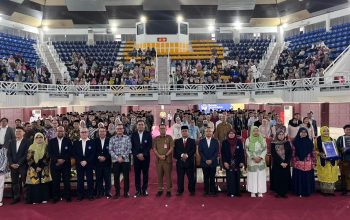
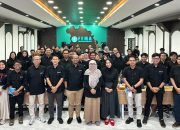
.GOLIPUT.ID, Bogor, Indonesia- The IPB Center of Excellence for China Rural Transformation Studies (CHARTS), China Agricultural University (CAU) Hub for Country and Region Studies in Indonesia, Faculty of Human Ecology at IPB University, College of International Development and Global Agriculture (CIDGA, CAU) organized the first session of the “IPB-CAU Rural Transformation Insights Series.”
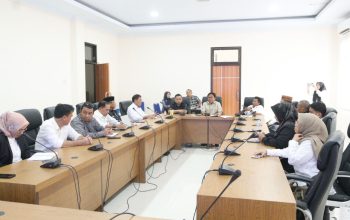
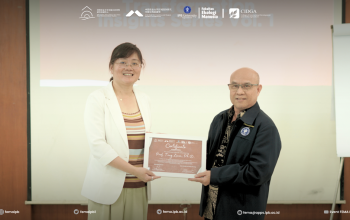
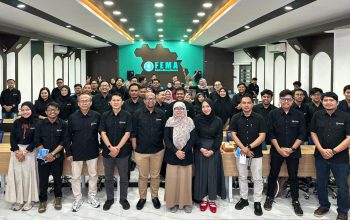
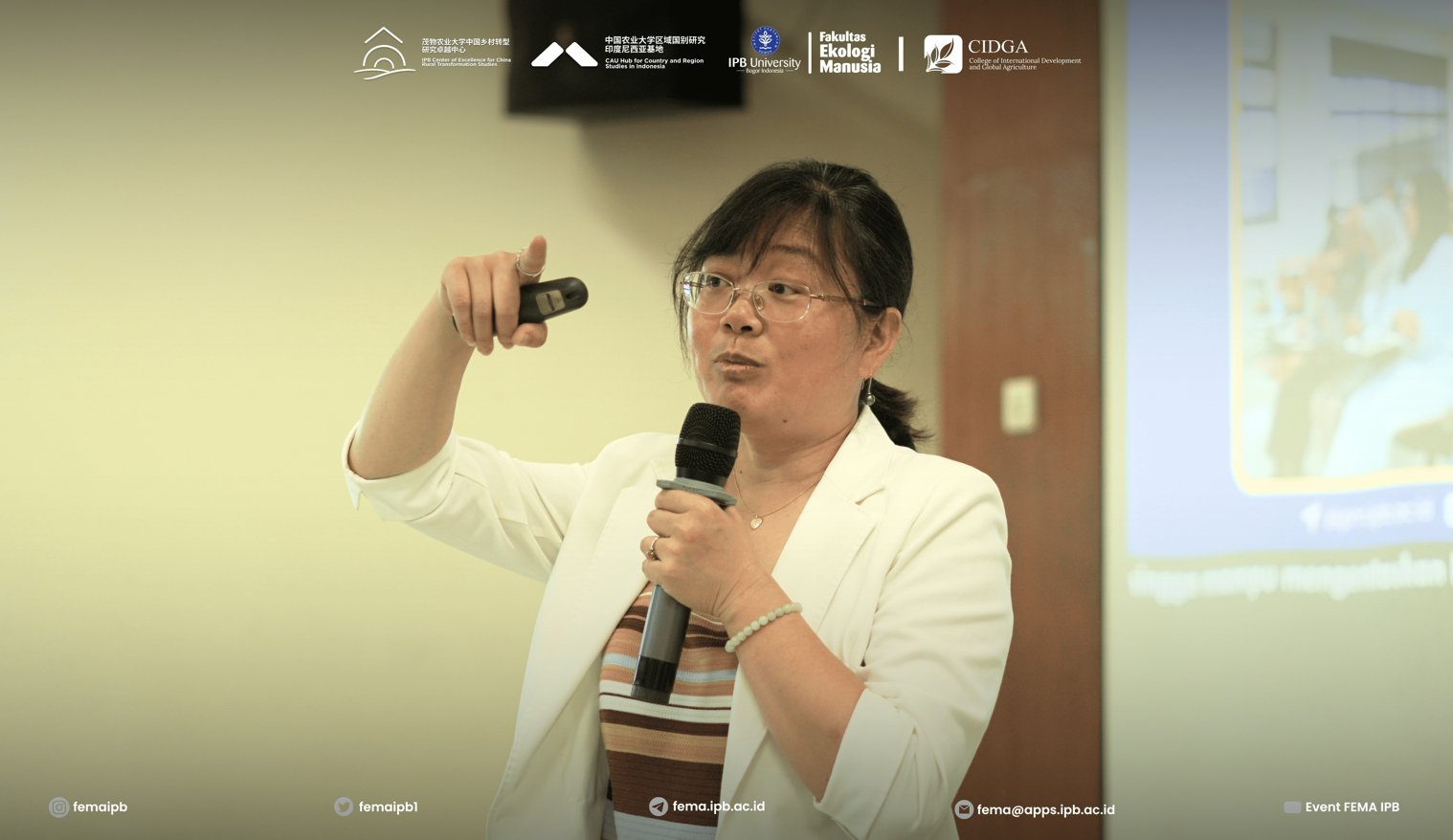
The lecture, titled “How to Understand Rural Transformation in China,” was delivered by Prof. Dr. Tang Lixia from CAU. The event was held from 10:00 to 12:00 WIB in Classroom B1, FEMA, IPB University, and focused on China’s long-term rural transformation, its policy foundations, and its broader implications for rural development in the Global South. Monday, April (27/26).
The lecture responded to a central question of contemporary development studies: how has China been able to transform its villages on a large scale and eliminate absolute poverty under its national poverty standard? Prof. Tang approached this question not by presenting rural transformation as a single policy achievement, but by placing it within the broader historical evolution of China’s agricultural and rural development strategies.
She explained that China’s rural transformation has been shaped by several major policy stages, including the Household Responsibility System after 1978, rapid industrialization and urbanization in the 1990s, the increasing importance of the No. 1 Central Document on agriculture and rural affairs since 2004, large-scale countryside construction after 2013, and the Rural Revitalization Strategy launched in 2017. Together, these stages show that China’s rural change has been a cumulative and adaptive process rather than a one-time intervention.
A key theme of the lecture was the transformation of urban-rural relations. Prof. Tang emphasized that China has gradually moved from an urban-rural dual structure toward a more integrated model of urban-rural development. In the early reform period, rural areas were primarily understood as agricultural production spaces, while cities were seen as centers of industry, employment, and public services.
Over time, however, this relationship has changed significantly. Farmers have been increasingly able to move to cities for off-farm employment, and rural residents have gained greater access to infrastructure, education, healthcare, and other public services. Prof. Tang noted that China’s urbanization rate reached around 67 percent in 2024, reflecting a profound demographic and spatial transformation. Yet this process has not simply meant the disappearance of rural society; rather, it has created new forms of connection between cities and villages.
Prof. Tang also discussed the transformation of farmers’ livelihoods and income structures. She explained that more and more rural residents have moved from agriculture-based livelihoods to diversified income sources, especially wage income generated through migration, industrialization, and urban employment. According to the data presented in the lecture, rural per capita disposable income increased from 134 RMB in 1978 to 21,691 RMB in 2023.
At the same time, the composition of farmers’ income has changed markedly: agricultural income has become less dominant, while wage income, transfer income, and other sources have become increasingly important. This shift demonstrates that rural transformation in China cannot be understood only through changes within agriculture itself. It must also be understood through the reorganization of labor, employment, mobility, and social welfare across urban and rural spaces.
Another important part of the lecture concerned the modernization of agricultural production. Prof. Tang pointed out that China’s agricultural system has moved gradually from small-scale, labor-intensive farming toward mechanized, more organized, and increasingly green forms of production. The level of agricultural mechanization has improved significantly, with the number of small and large tractors increasing greatly between 1978 and 2024.
Meanwhile, agricultural production has also begun to shift away from heavy chemical fertilizer use. In recent years, fertilizer use has gradually declined, indicating a transition from fertilizer-intensive production toward greener agricultural practices. Prof. Tang also noted that land transfer has increased, and new agricultural actors such as cooperatives and family farms have become more important. These changes suggest that Chinese agriculture is undergoing not only technological modernization but also institutional and organizational transformation.
The lecture further highlighted the changing value and function of rural areas. Prof. Tang argued that rural China should no longer be understood only as a site of agricultural production. Instead, rural areas now carry multiple economic, social, ecological, and cultural values. Economically, villages have become spaces for rural tourism, e-commerce, study tours, homestays, and other diversified businesses.
Socially, they preserve memories, relationships, and ways of life that continue to attract both rural residents and urban returnees. Ecologically, many rural areas contain important conservation zones, landscapes, mountains, rivers, and fields that are central to environmental protection. Culturally, rural areas are carriers of traditional villages, local heritage, and intangible cultural resources. Through these examples, Prof. Tang showed that rural transformation is not merely about improving income or infrastructure, but also about redefining what rural areas mean in modern development.
Prof. Tang used a wide range of visual materials to illustrate the dramatic changes in Chinese villages, including improvements in housing, transportation, village landscapes, food and living quality, public services, guesthouses, coffee shops, agricultural machinery, and e-commerce. These examples helped participants understand rural transformation as something visible in everyday life. Roads, bus stations, village service centers, cafés, rural libraries, homestays, and digital platforms are not isolated changes; they represent a broader reconfiguration of rural space.
The emergence of business-oriented, service-oriented, and landscape-oriented village spaces reflects the embedding of modernity into rural construction. In this sense, China’s villages are not simply becoming “urbanized”; they are being reconstructed as hybrid spaces that connect agriculture, services, culture, ecology, and consumption.
In the concluding part of the lecture, Prof. Tang summarized China’s rural transformation through several key shifts. First, urban-rural relations are moving from separation toward integration. Second, farmers’ livelihoods are shifting from primarily agriculture-based to more diversified and non-agriculture-based income structures.
Third, agricultural production is becoming more mechanized, organized, and moderately scaled. Fourth, the value of rural areas is becoming increasingly diversified. Finally, the once-integrated issues of agriculture, rural areas, and farmers are beginning to show more differentiated trajectories, requiring more nuanced policy understanding.
The lecture provided IPB University students and faculty with a systematic perspective on China’s rural transformation and opened a meaningful space for comparative reflection between China and Indonesia. For countries facing challenges of rural poverty, agricultural modernization, urban-rural inequality, and village revitalization, China’s experience offers not a simple model to be copied, but a rich case for understanding how long-term policy commitment, institutional adaptation, public investment, labor mobility, and rural value reconstruction can interact over time.
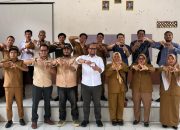
As the first session of the IPB-CAU Rural Transformation Insights Series, the event marked an important step in strengthening academic exchange on rural transformation and development cooperation between IPB University and China Agricultural University.